Influence is not the same as imitation. I return to artists who make an unmistakable world of their own—artists whose work changes while the underlying voice remains entirely consistent.
Four notes from the studio wall.
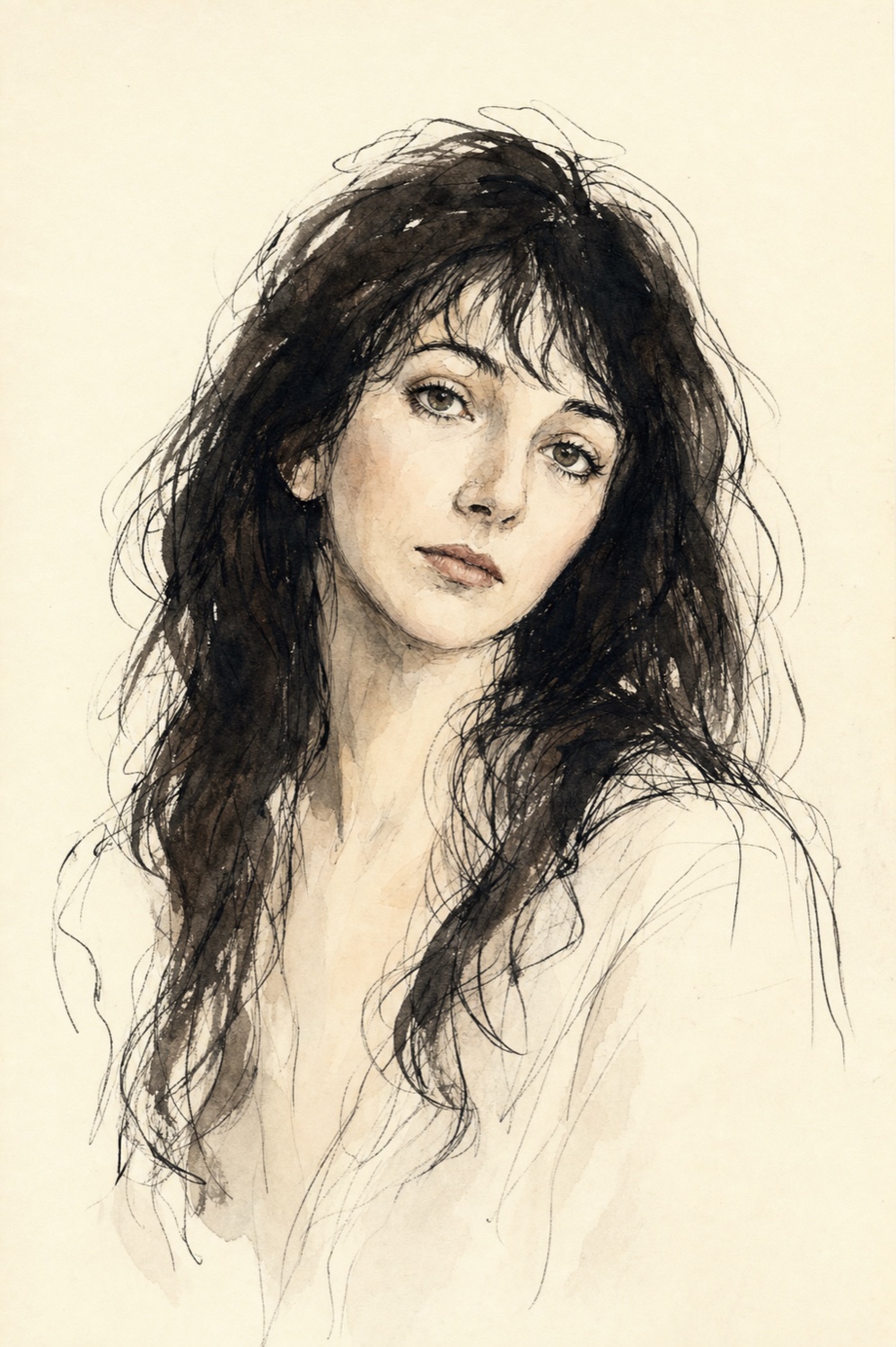
A loose studio study of Kate Bush, by Jane Stephens.
01 · Imagination
Kate Bush
Making an inner world visible
Kate Bush showed me that imagination need not be an escape from serious thought. A song can become a room, a landscape or a piece of weather; an emotion can be given its own physical laws.
I am drawn to work that is exact in feeling but not exhausted by explanation. Her images remain open after the music has stopped. They invite the listener to finish the meaning, which is something I hope a drawing can do too.
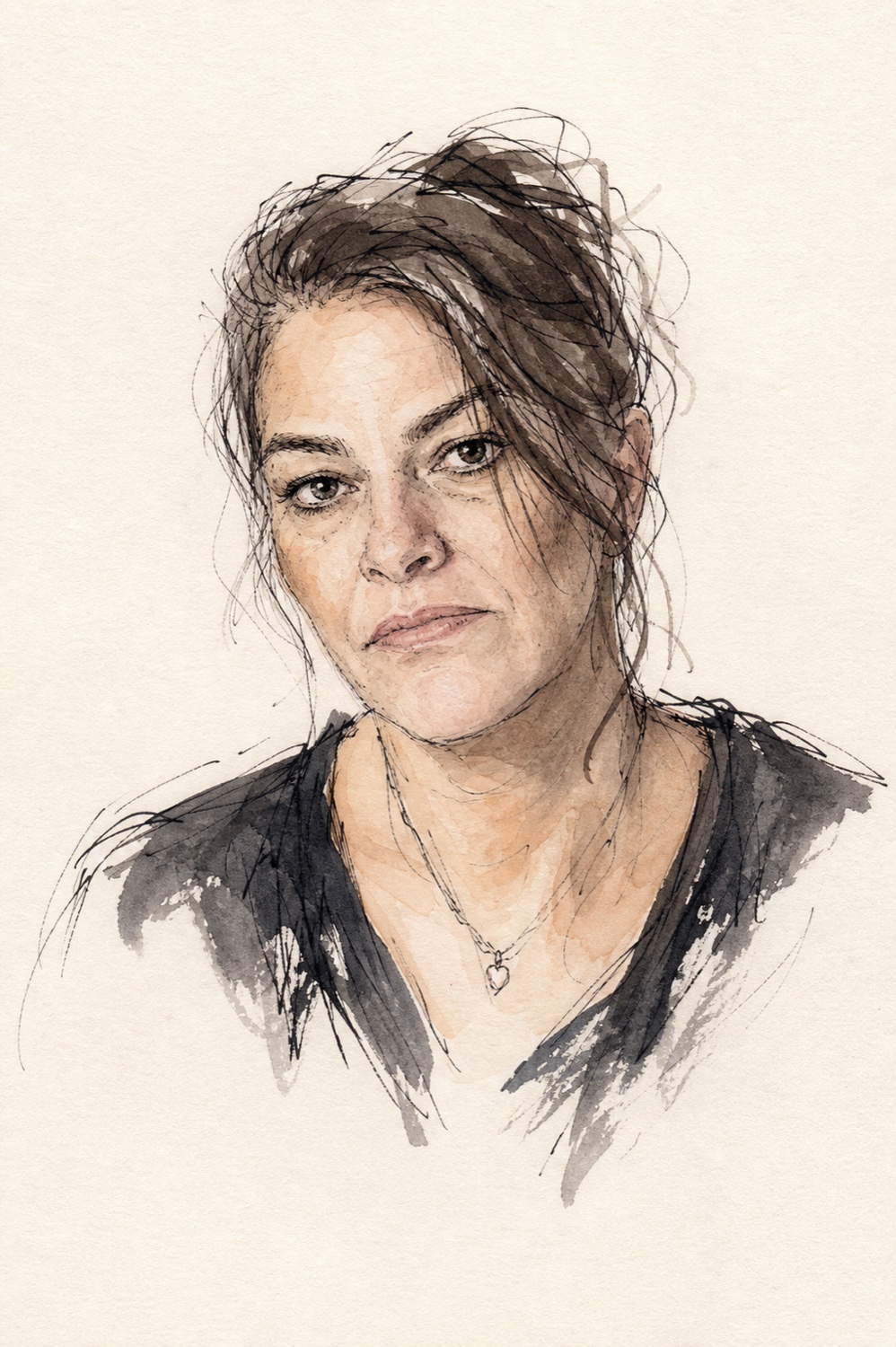
A loose studio study of Tracey Emin, by Jane Stephens.
02 · Autobiography
Tracey Emin
The inner life as material
Tracey Emin’s work gave me permission to think of a private life as artistic material—not because disclosure is automatically brave or interesting, but because experience can be shaped into a form that speaks beyond the person who lived it.
What looks spontaneous is often held together by ruthless selection. The candour matters, but so does the discipline. I return to that combination whenever a drawing feels too polite to be true.
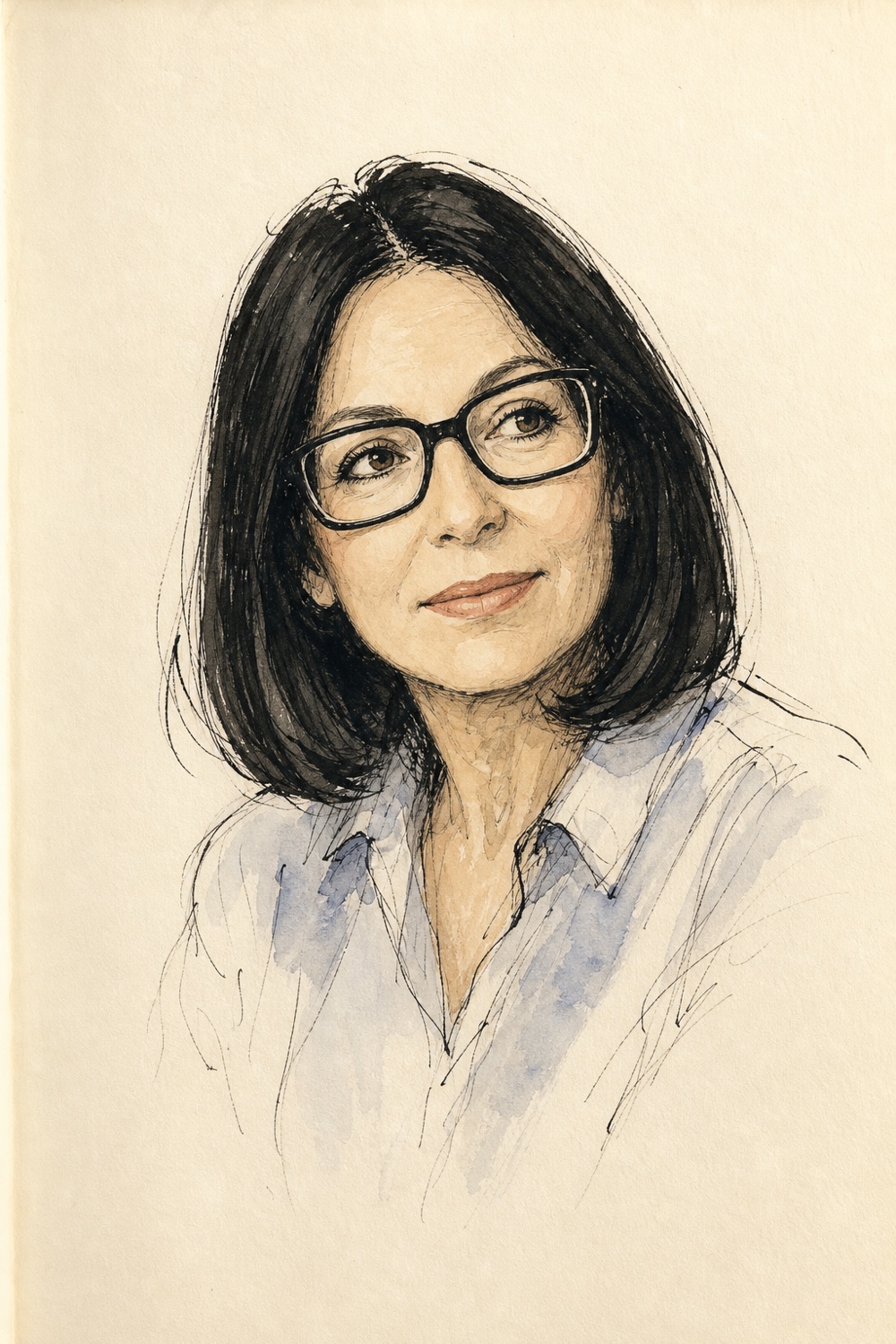
A loose studio study of Nana Mouskouri, by Jane Stephens.
03 · Reinvention
Nana Mouskouri
Changing without disappearing
Nana Mouskouri has moved between languages, repertoires, audiences and decades without ever becoming difficult to recognise. Her career suggests that consistency is not the repetition of a single idea. It is the persistence of a voice.
That distinction matters to me. I want the freedom to make a public-information poster, a Christmas card or a character for a game without pretending they are the same kind of object—and without losing the sensibility that made them mine.
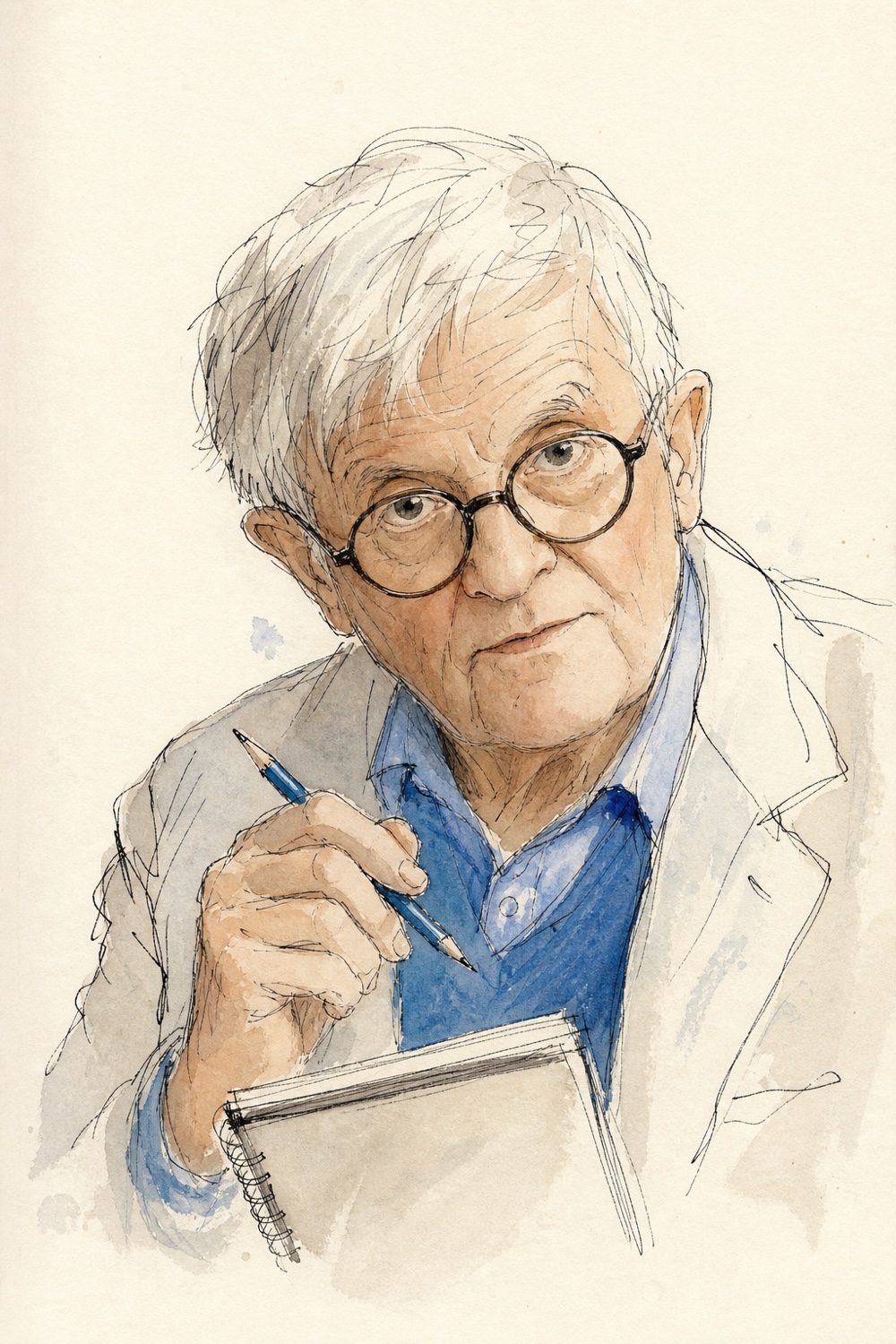
A loose studio study of David Hockney, by Jane Stephens.
04 · Observation
David Hockney
Looking properly
David Hockney’s work repeatedly returns to the same deceptively simple instruction: look. Work in the place, or with the person, and allow time to alter what you thought you had seen.
I admire the way technique remains a servant of attention. A pencil, a brush or a screen is simply another means of testing perception. The freshness comes not from changing tools for their own sake, but from continuing to be curious about the subject in front of you.
What joins them
“A recognisable voice is built by changing honestly, looking closely and leaving enough unsaid.”
I am not trying to make work that resembles theirs. I return to them as reminders: imagination may be rigorous, autobiography may be shaped, reinvention need not erase identity, and observation is never a passive act.
These reflections describe Jane’s personal artistic influences. They do not imply endorsement, collaboration or association with the artists named, their representatives or their estates.